
Time-lapse shows slow change fast: take one frame at a set interval, play the frames back at normal speed, and hours, months or years pass in seconds. It began in 1878 with an Englishman’s row of cameras beside a racetrack in California, and today it runs on solar-powered, 4G-connected cameras on building sites across the UK. Site-Eye has been part of that story since its first job filming the refurbishment of HM Treasury around 2000.
Key dates
| Year | Milestone |
|---|---|
| 1872 | Leland Stanford hires Eadweard Muybridge to photograph his horses in motion |
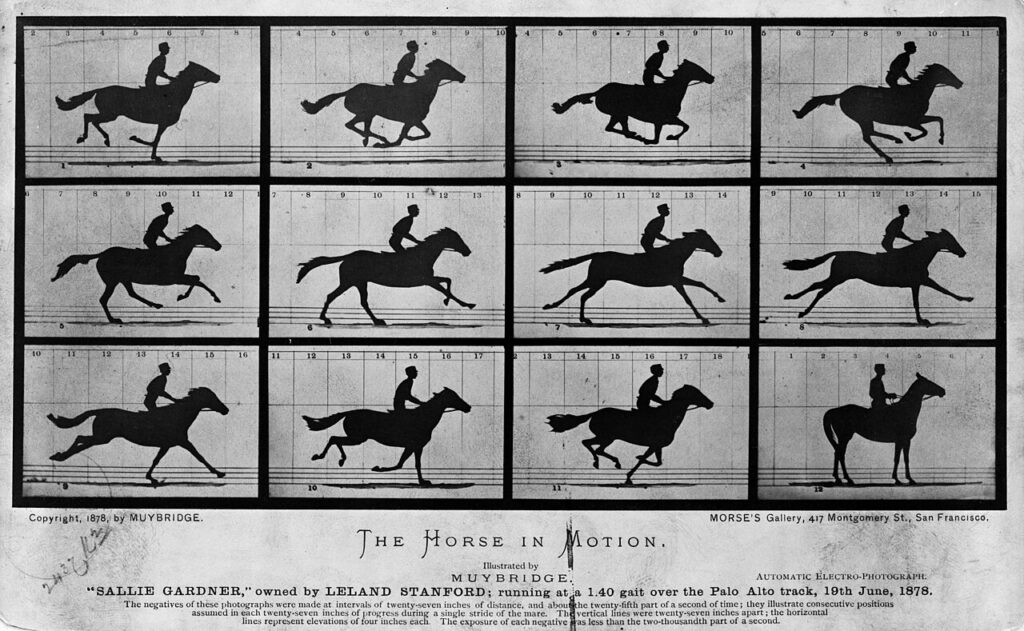
| 1878 | Muybridge’s The Horse in Motion: a row of cameras captures Sallie Gardner at a gallop, Palo Alto |
| 1879 | Muybridge’s zoopraxiscope projects his sequences as moving pictures |
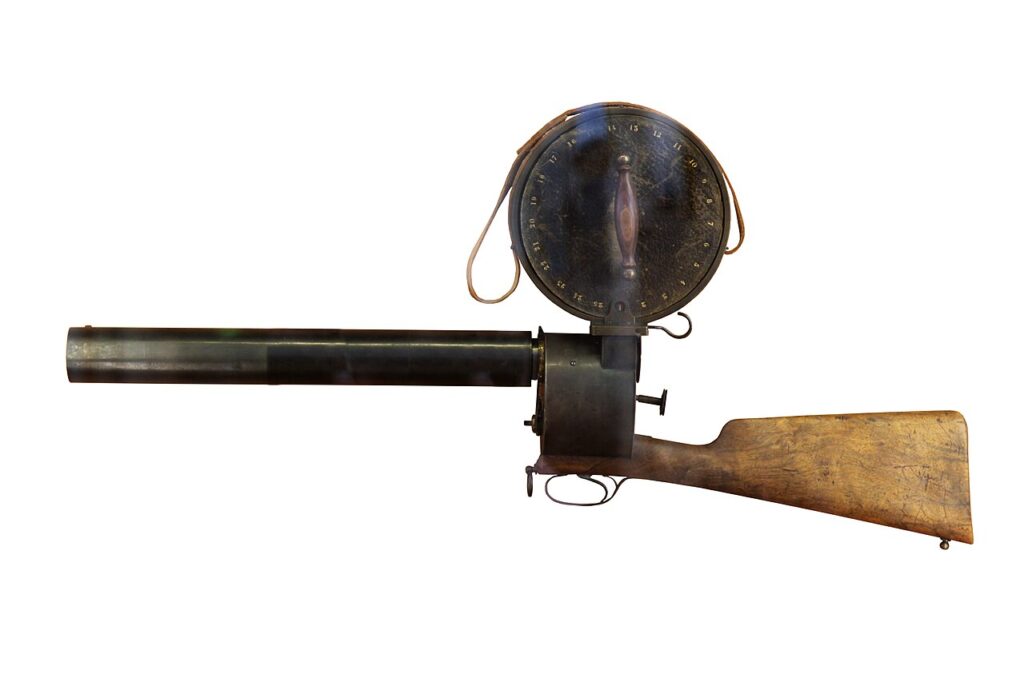
| 1882 | Étienne-Jules Marey’s chronophotographic gun shoots 12 images a second from one viewpoint |
| 1887 | Muybridge publishes Animal Locomotion (University of Pennsylvania) |
| 1897 | Georges Méliès uses time-lapse in Carrefour de l’Opéra, its first use in a film |
| 1900 | Wilhelm Pfeffer films plant growth one frame at a time over weeks |
| 1909 | Jean Comandon films biological processes with Pathé Frères |
| 1910 | F. Percy Smith’s The Birth of a Flower brings time-lapse to cinema audiences |
| 1924 | Arnold Fanck’s Das Wolkenphänomen von Maloja films clouds over the Alps |
| 1956 | John Ott’s time-lapse appears in Disney’s Secrets of Life |
| 1982 | Koyaanisqatsi, shot by Ron Fricke, makes time-lapse a feature film’s main language |
| 1991 | The first webcam watches the Trojan Room coffee pot at the University of Cambridge |
| c. 2000 | Site-Eye’s first project: the HM Treasury refurbishment, 1 Horse Guards Road, London |
| 2002 | Site-Eye established; the Treasury refurbishment completes |
| 2014 | Instagram’s Hyperlapse app brings moving time-lapse to phones |
| 2016 | Site-Eye starts filming the Luton DART airport link |
| 2017–2019 | Site-Eye films the Headingley Stadium redevelopment, Leeds |
| 2026 | Site-Eye joins the Survey Solutions Group, with 3,000+ projects filmed and 400+ cameras on site |
Before film: Muybridge and chronophotography
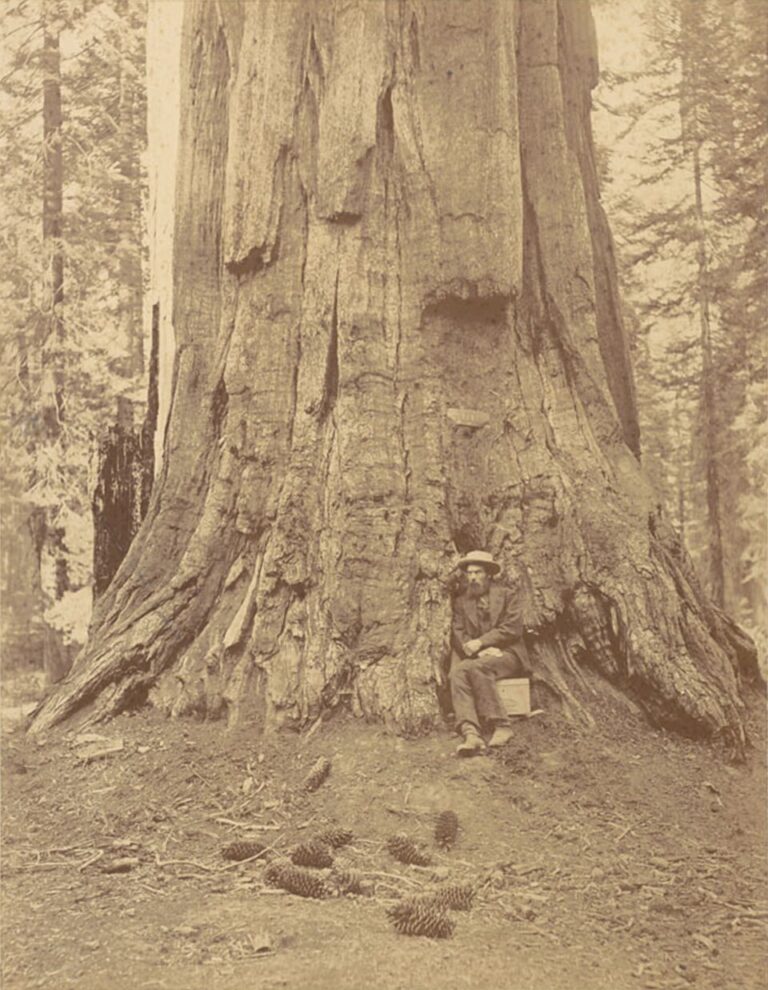
The story starts with Eadweard Muybridge, born Edward Muggeridge in Kingston upon Thames in 1830. In 1872 the Californian racehorse owner Leland Stanford hired him to settle a question no eye could answer: does a galloping horse ever have all four feet off the ground?
On 19 June 1878, at Stanford’s Palo Alto track, Muybridge lined up cameras along the course and let the horse trigger them as it ran. The Horse in Motion shows the mare Sallie Gardner in 12 frames, each taken about a 25th of a second apart with an exposure of under a 2,000th of a second. It proved the horse does leave the ground, and it was one of the first photographic sequences to break movement down into moments.
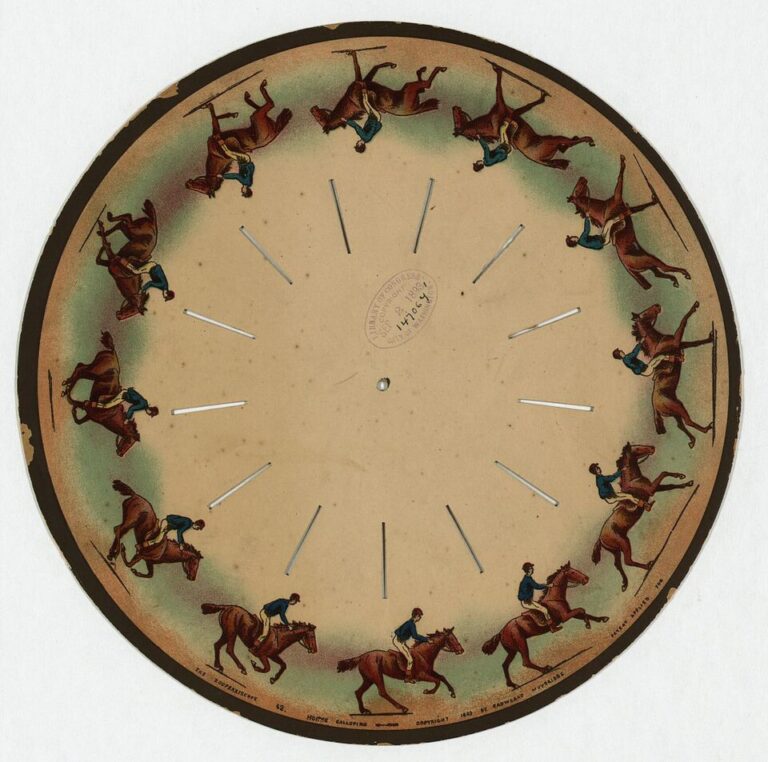
Muybridge then turned the stills back into motion. His zoopraxiscope of 1879 projected images painted from his photographs onto spinning glass discs. In 1887 he published Animal Locomotion, made at the University of Pennsylvania, with more than 20,000 photographs of people and animals moving. He died in Kingston in 1904.
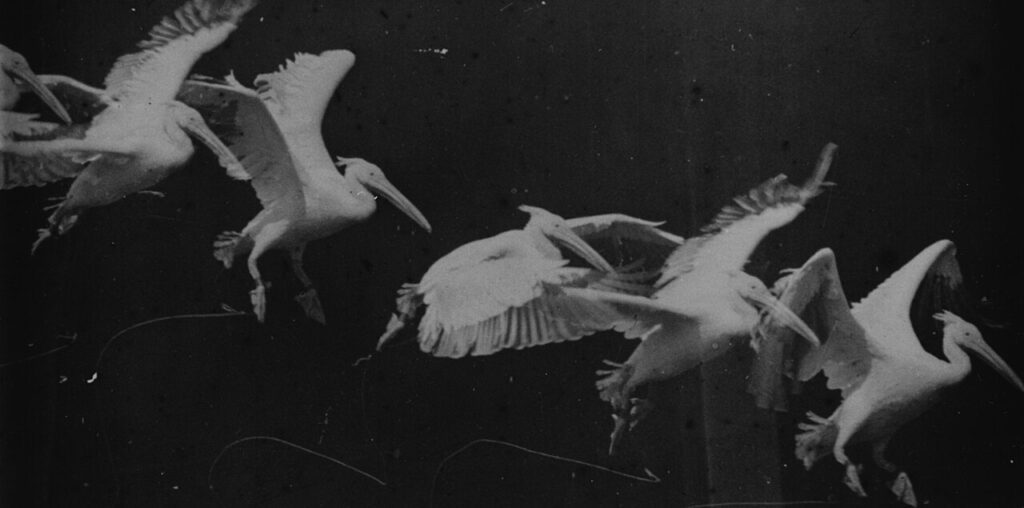
In France, the scientist Étienne-Jules Marey took a different route. His chronophotographic gun of 1882 shot 12 images a second from a single viewpoint, solving the irregular spacing of Muybridge’s camera rows. Marey’s “chronophotography” gave the technique its first name.
Muybridge and Marey sped motion up into slices. Time-lapse does the reverse: it gathers slices of slow change and plays them back fast. Their work made both possible.
Early cinema finds time-lapse
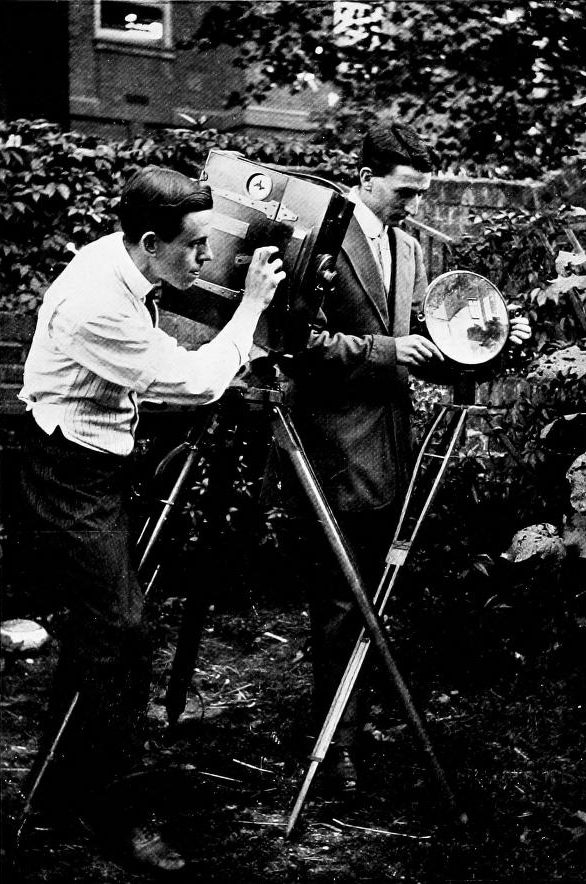
Once cine cameras could expose one frame at a time, film-makers found they could compress time as well as record it.
- 1897: Georges Méliès used time-lapse in Carrefour de l’Opéra, its first known use in a film.
- 1900: the German botanist Wilhelm Pfeffer filmed plants one frame at a time over several weeks, making growth visible in about a minute of film.
- 1909: Jean Comandon, working with Pathé Frères, filmed biological processes too slow or small to see.
- 1910: the English naturalist F. Percy Smith released The Birth of a Flower, a seven-minute film of flowers opening, and brought time-lapse to ordinary cinema audiences.
- 1924: Arnold Fanck filmed cloud banks rolling over the Swiss Alps in Das Wolkenphänomen von Maloja. His mountain films made time-lapse a tool for landscape and weather as well as science.
Science, nature and the big screen
The American John Ott made his first time-lapse film in 1927, while still at school. By 1937 he had built an automated camera rig, and he went on to fill a greenhouse with cameras and early motion control. His footage reached a mass audience in Disney’s Secrets of Life in 1956, a film credited with pioneering the modern use of time-lapse on film and television.
In 1982 Koyaanisqatsi, directed by Godfrey Reggio and shot by Ron Fricke to music by Philip Glass, made time-lapse the main language of a feature film. Its racing clouds, crowds and city traffic, with no dialogue at all, still influence how time-lapse of cities and construction looks today. Fricke pushed further in Baraka (1992), using motion-control rigs to move the camera during long time-lapse shots.
From film to digital
For most of the 20th century, time-lapse meant cine film, a camera that could fire single frames and a timer called an intervalometer. Every frame cost money to shoot and develop, and nobody saw the result until the film came back from the lab.
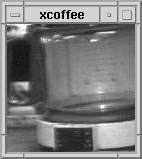
The network camera changed that. In 1991 researchers at the University of Cambridge pointed a camera at the coffee pot in the Trojan Room so they could check it from their desks. It was the first webcam, and it went on the web in 1993. By 1994 the Connectix QuickCam had put a webcam on ordinary desks.
Once a camera could take a digital still and send it down a line on a timer, nothing needed developing. A camera could be left on a roof for months, and anyone with a login could watch a project grow. That is the idea Site-Eye was built on.
Site-Eye: from the Treasury to today
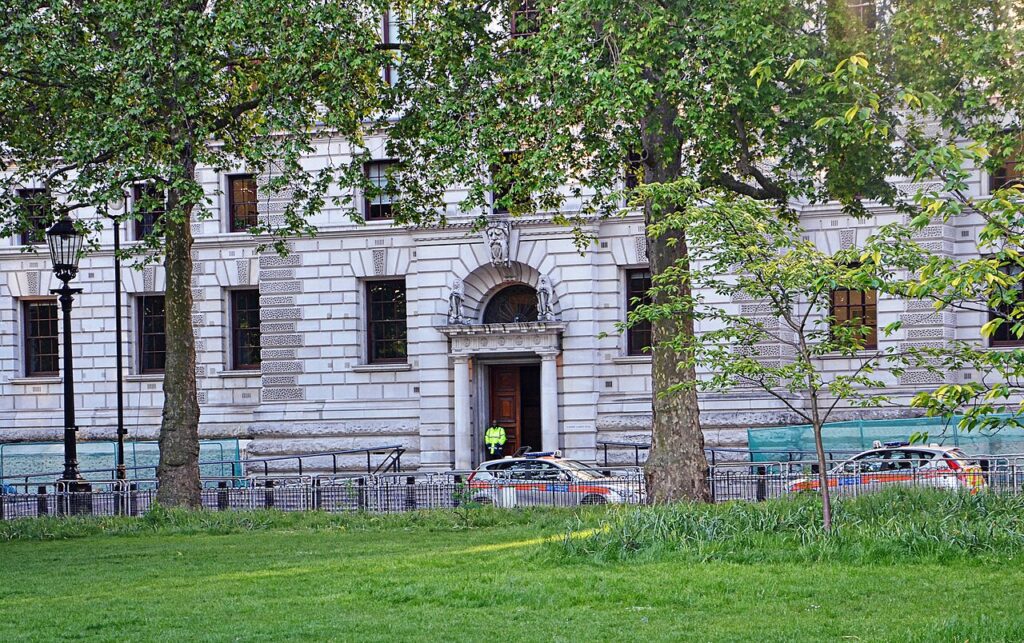
The first project: HM Treasury, around 2000. Site-Eye’s first time-lapse was the refurbishment of the Treasury building at 1 Horse Guards Road, on the west end of Government Offices Great George Street. The £140 million project was let as a private finance initiative in 2000, designed by Foster + Partners with Feilden + Mawson and built by Bovis Lend Lease. When it finished in 2002, all Treasury staff worked under one roof for the first time in about 50 years.
2002: Site-Eye established. The business was set up to do one thing well: long-term, fully managed time-lapse filming of construction. Instead of a film crew returning to site, Site-Eye installs its own cameras, keeps them running for the length of the build and turns the archive into a finished film.
London’s skyline. Most of Site-Eye’s work has been in and around London, including The Shard, the London 2012 Olympics, Crossrail, Thameslink, King’s Cross Station, One Hyde Park and Battersea Power Station.
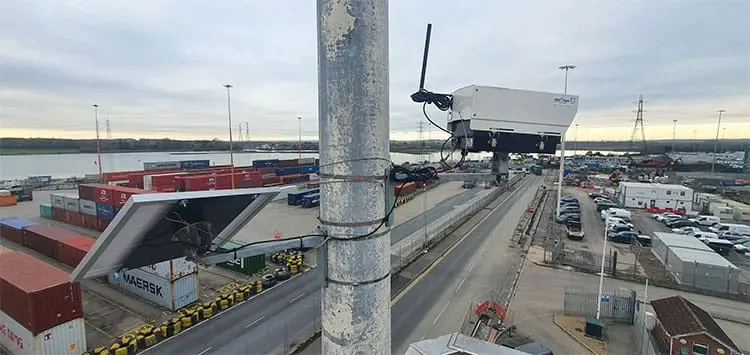
From stills to live video. The service grew from a camera and a finished film into an online portal, where clients see a time-stamped image refreshed every few minutes and the full archive. SiteStream added live-streamed HD video, recorded as searchable 10-minute clips. Today’s cameras have built-in 4G and run on mains or solar power, so they can film sites with no power or network connection.
2026: part of the Survey Solutions Group. In July 2026 Site-Eye joined the Survey Solutions Group, with Gareth Evans-McClave staying on as managing director. From offices in Hebden Bridge and Brighton, Site-Eye has now filmed more than 3,000 projects for clients including Kier, Mace, Lendlease, Balfour Beatty and Network Rail, and has more than 400 cameras on site. It is a Constructionline Gold member.
Time-lapse today
Time-lapse is now everywhere. Since Instagram launched Hyperlapse in August 2014, a phone can make a moving time-lapse in seconds.
On a building site the job is harder. A camera has to run unattended for months or years, through weather and site changes, without missing a day. Modern construction time-lapse cameras run on solar power, send images over 4G, stream live video and back up off site. The finished film still works the way Muybridge’s frames did in 1878: a run of single images that shows what no one could see by standing and watching.
Planning a build? Site-Eye has been filming construction since 2002. Call 020 3154 8353 or see how our fully managed construction time-lapse cameras work.
Sources
- The Horse in Motion, National Gallery of Art
- Eadweard Muybridge, Britannica
- Muybridge’s Pioneering Motion Pictures, Google Arts & Culture
- Chronophotographic gun, Wikipedia
- Time-lapse photography, Wikipedia
- Wilhelm Pfeffer, Who’s Who of Victorian Cinema
- The Birth of a Flower (1910), Letterboxd
- John Ott, Wikipedia
- Koyaanisqatsi (1982), MoMA
- Trojan Room coffee pot, Wikipedia
- Webcam, Wikipedia
- Introducing Hyperlapse from Instagram, Meta
- Government Offices Great George Street, Wikipedia
- Survey Solutions acquires Site Eye, Survey Solutions
- Survey Solutions acquires Site-Eye, DSW Capital


